the RAGLAND lab: Green Science
A note from Stephanie Ragland on her Passion for Green Science
While much of my time is currently spent indoors, hunched over culture dishes full of macrophages or bacteria (or both), my time as a child was spent entirely engrossed by the great outdoors. My appreciation for the outdoors as a child has always come hand-in-hand with incredible respect. For instance, I was vigilant to never litter and to leave the campground cleaner than I found it. In my lifetime, I have witnessed the human capacity to detect and then avoid environmental catastrophes. The most prominent example is the problem of the hole in the ozone layer that was a huge topic of discussion in the 90s. In this example, scientists made an observation (i.e., hole in ozone layer), identified the root cause (i.e., chlorofluorocarbons (CFCs)), and then assembled guidelines to solve the problem (i.e., use less CFCs). We collectively followed those guidelines and made incredible gains in repairing the ozone layer.
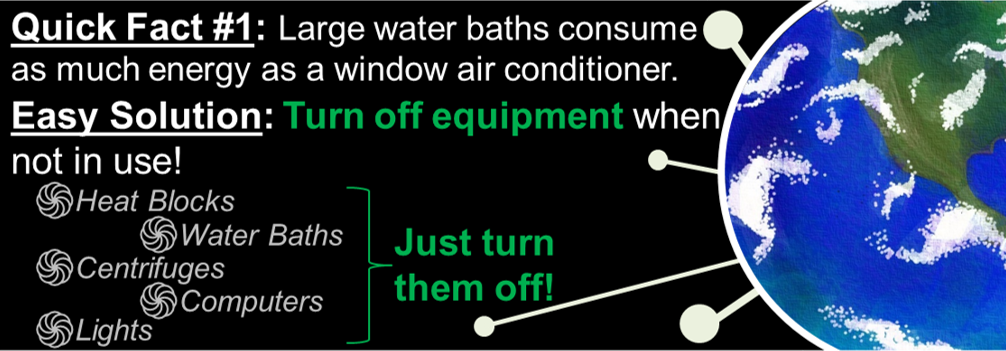
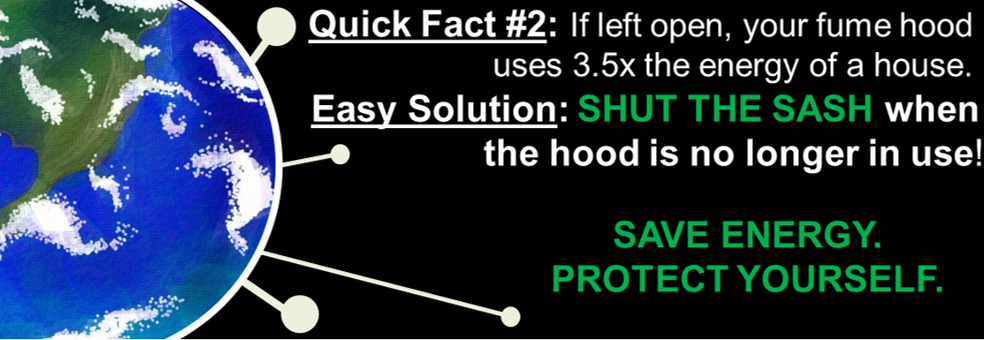
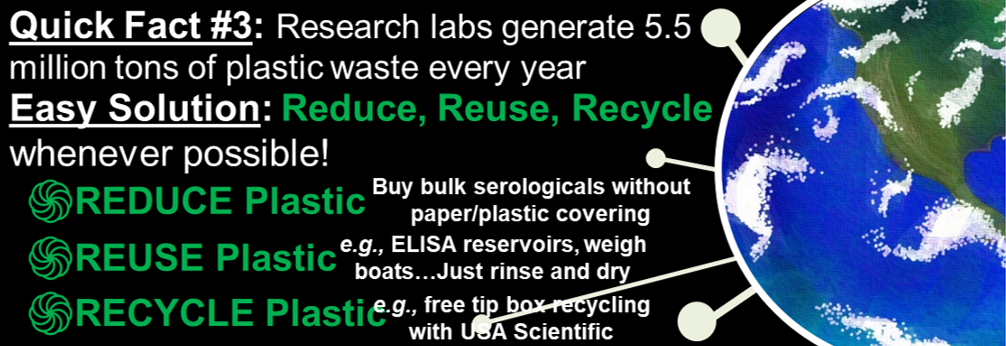
In stark contrast to the ozone layer problem, the problem of unprecedented climate change has solutions that have not so easily been adopted and integrated into everyday life. These solutions have also not been so easily adopted and integrated into scientific life. In 2019, health care facilities (i.e., hospitals and labs) accounted for 4.4% of total global greenhouse gas emissions. Research labs consume five times more energy than office spaces and generate 5.5 million tons of plastic waste every year. Indeed, life scientists (a small number of people overall) account for 2% of all global plastic wastes. Research buildings also consume up to four times more water than commercial buildings. If we can do something about this, then we should. In the Ragland lab, we hope to establish easy practices that reduce our energy and plastic wastes.
For more information about Green Science, please visit https://mygreenlab.org/
Helpful & Simple Tips to be More Green