Our Science
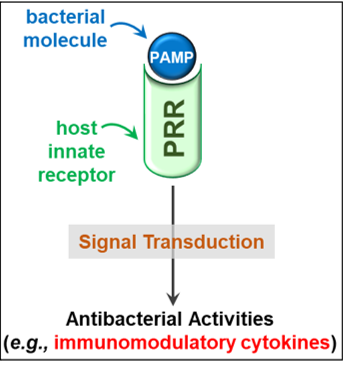
We evolved living in a sea of bacteria. Although some bacteria cause disease, most encountered bacteria are beneficial or benign. These bacteria, pathogenic or not, are controlled by our immune system, and immune control of bacteria relies on our ability to detect the presence of bacteria. At the molecular level, bacterial detection occurs when innate immune sensors, termed pattern recognition receptors (PRRs), bind to conserved bacterial molecules, termed pathogen-associated molecular patterns (PAMPs). PAMP detection by PRRs initiates signal transduction that results in antibacterial activities. It is noteworthy that our immune system does not function like a switch, where pathogenic bacteria are detected while non-pathogenic bacteria are ignored. Indeed, the immune system can, in principle, detect any bacterium. The RAGLAND lab focuses on how all bacteria are detected and how this detection informs immunity.
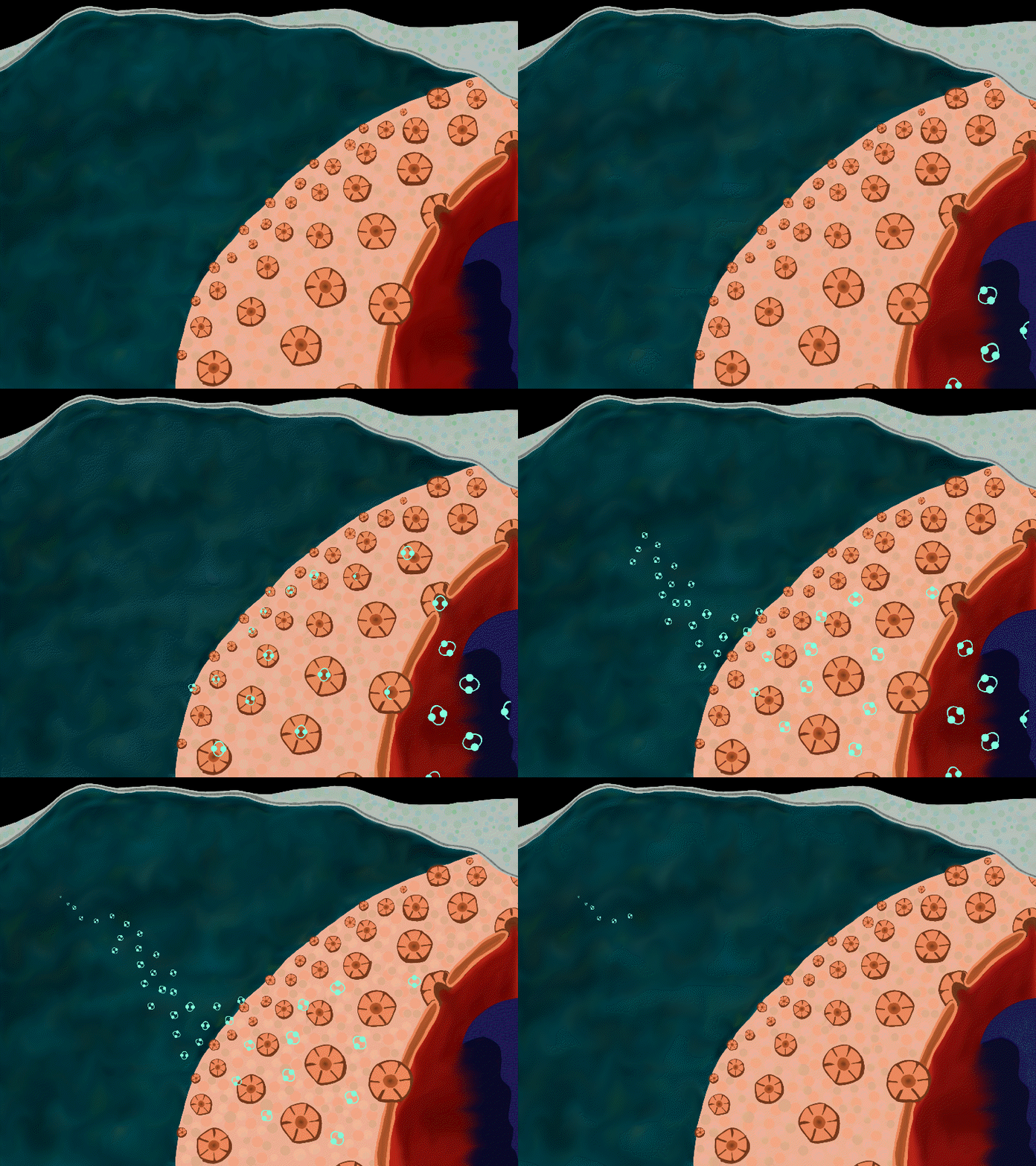
***artwork depicts bacterial lysis within a phagosome, followed by transport of PAMPs (in this case, cyclic dinucleotides) into the cytosol.
the RAGLAND lab: Project Areas
1) How does any one IMMUNE CELL detect any one BACTERIUM?
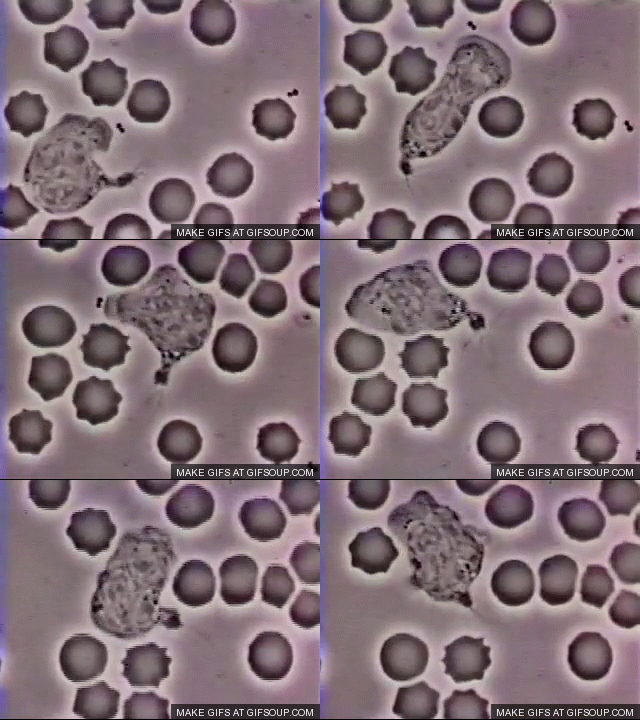
In the RAGLAND lab, we address this question at the molecular level by studying PRRs, their PAMP ligands, and their signal transduction. At the cell biological level, we study PRR detection of bacteria in the context of phagocytes. Phagocytes are invaluable for studying host-bacteria interactions as their interactions with bacteria are wildly dynamical. This host-bacteria dynamic is evident in David Rogers’ 1950s video of a neutrophil chasing and then eating a staphylococcus bacterium.
Problem: PAMPs and PRRs must be co-compartmentalized.
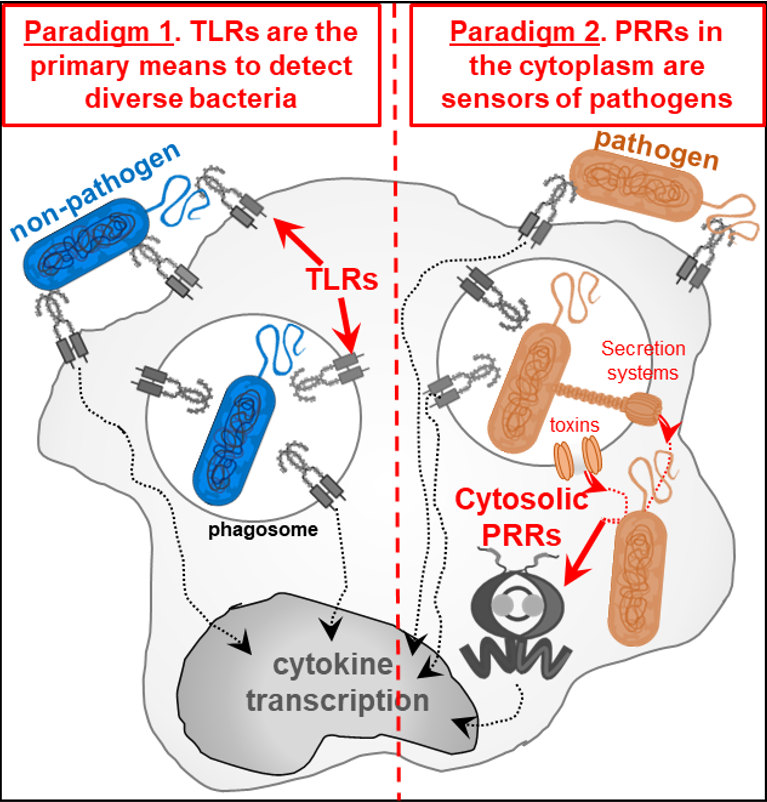
PAMP-PRR activities are regulated, in part, by their need for co-compartmentalization. This simple principle of direct ligand-receptor binding dictates PRR activities because distinct PRRs display distinct subcellular localizations. For example, one family of PRRs, the Toll-like receptors (TLRs), surveys for PAMPs in the extracellular and intraphagosomal spaces - these spaces are commonly occupied by bacteria. As such, TLRs are considered the primary means by which cells detect diverse bacteria. In contrast, distinct families of PRRs survey for PAMPs in the cytosolic space - a space generally thought only accessible by select pathogens that possess membrane-perturbing factors. Accordingly, cytosolic PRRs are generally considered pathogen-specific sensors.
Rewriting the Paradigm: the cytosol-surveying PRR, STING, detects diverse bacteria in macrophages.
We leveraged a large panel of evolutionarily diverse bacteria for side-by-side infections with arrays of CRISPR-edited macrophages to reveal themes of innate detection of bacteria. In this regard, we found that the cyclic dinucleotide (CDN) sensor STING is a cytosol-surveying PRR that commonly detects diverse bacteria. STING therefore joins the TLRs as a common sensor of bacteria. We made the surprising finding that pyrimidine-based CDNs, such as 2’3’-cUA, are bona fide STING agonists, thereby expanding the total possible number of bacteria-produced STING-stimulating CDNs. The consequence of bacterial detection by STING is STING-driven type I interferon (IFN-I) cytokine production. Several projects underway in the RAGLAND lab revolve around the role of phagocyte STING as a common sensor of diverse bacteria and dissecting the immunological consequences for IFN-I production in response to bacteria.
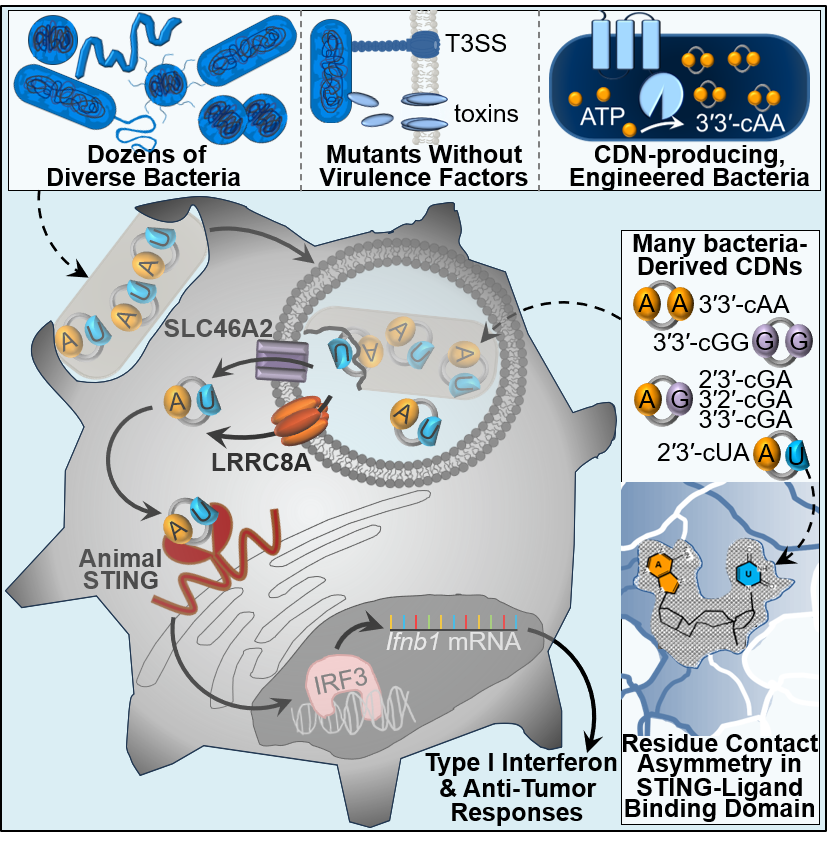
2) How do BACTERIAL MOLECULES exit PHAGOSOMES to stimulate INNATE SENSORS?
We have found that detection of bacteria, pathogen and non-pathogen alike, by the cytosol-surveying PRR, STING, requires phagocytosis. Thus, formation of a phagosome is a prerequisite for STING activation in macrophages.
Problem: the phagosomal membrane serves as a permeability barrier to most bacterial PAMPs and molecules.
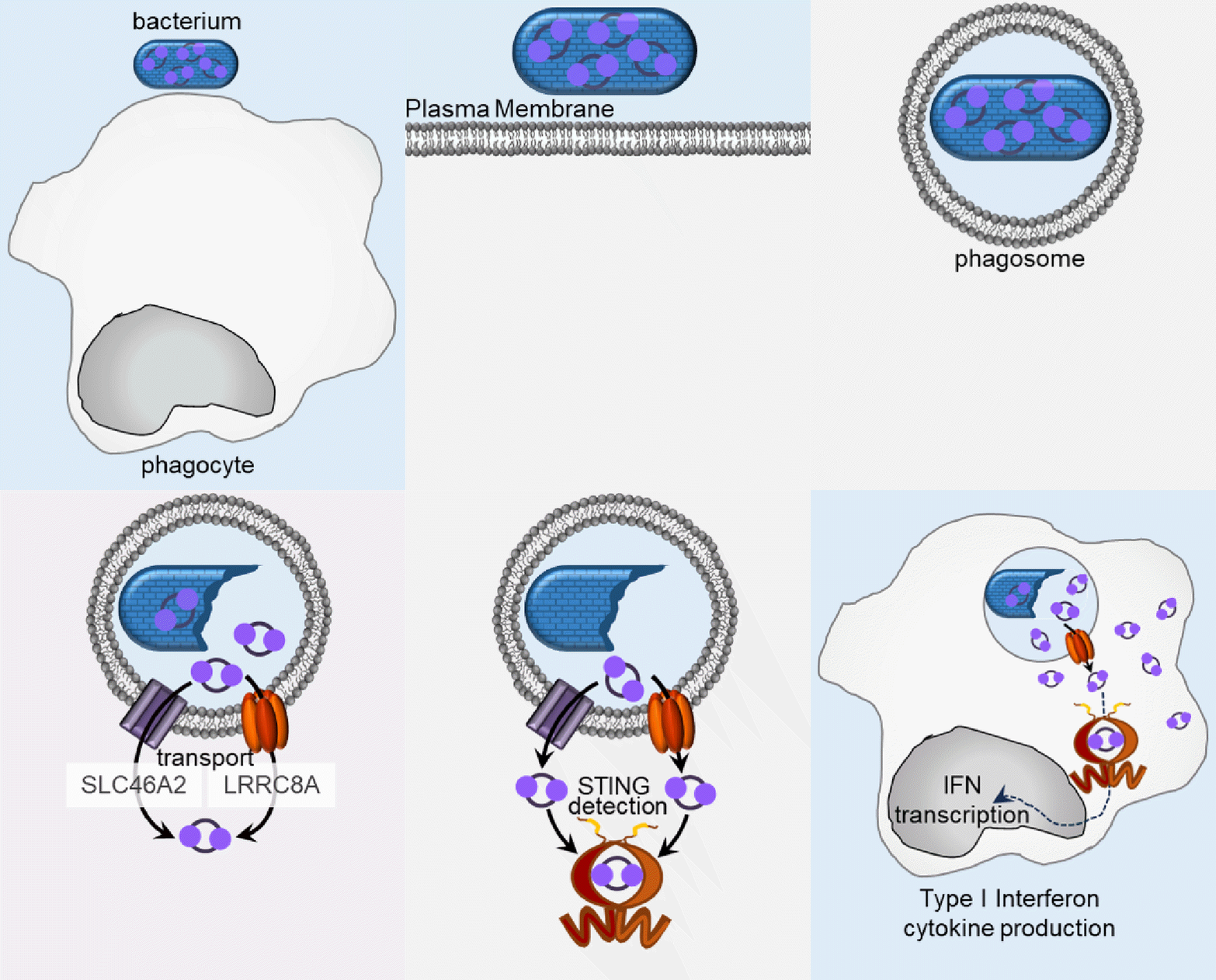
Rewriting the Paradigm: phagosomes are the nexus between the outside (i.e., bacteria and their PAMPs) and the inside (i.e., cytosol-surveying PRRs).
STING is a PRR that surveys for CDNs in the cytosol - not in the phagosomal lumen where most bacteria reside. As the phagosomal membrane is a permeability barrier that separates bacteria and their CDNs from STING, we investigated how phagocytosis leads to STING activation. We found two CDN transporters, SLC46A2 and LRRC8A, link CDN-producing, phagosomal bacteria to cytoplasmic STING.
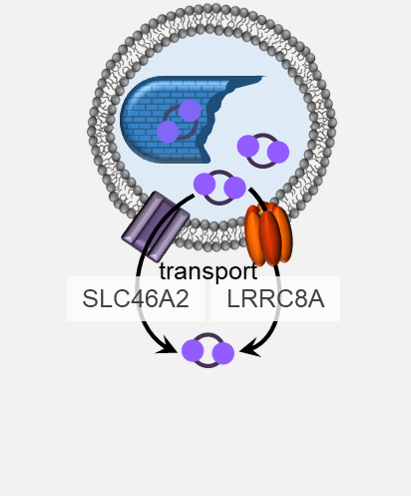
A theme from our work and the literature is the prerequisite of phagocytosis for activation of cytosol-surveying PRRs, thereby positioning the phagosome as a critical organelle of innate immunity. Several projects underway in the RAGLAND lab revolve around which PAMPs exit phagosomes, how PAMPs exit phaogomes, and how PAMP exodus influences immunity.
3) How can ENGINEERING BACTERIA help to stimulate anti-tumor IMMUNITY?
Because our immune system is critical to combating cancer, targeting components of our immune system to potentiate their intrinsic anti-tumor activity is an attractive cancer therapeutic approach. One class of immunotherapeutics is immune checkpoint blockade (ICB), which functions by suppressing negative regulators of anti-tumor immunity. ICB, however, is only efficacious in a subset of patients. Alternative cancer immunotherpeutic strategies are therefore needed.
Problem: immune checkpoint blockade (ICB) is an efficacious cancer immunotherapeutic in only a subset of patients.
An alternative to ICB is to potentiate positive regulators of anti-tumor immunity. In this regard, targeting innate immunity is promising since stimulation of PRRs, such as STING, potentiates downstream anti-tumor adaptive responses. The use of bacteria to stimulate anti-tumor immunity has known clinical efficacy and safety. For example, the FDA-approved, bacteria-based Bacillus Calmette-Guerin (BCG) vaccine is the standard of care for treating bladder cancer. Bacteria therefore offers a safe, efficacious platform for stimulating innate-driven anti-tumor immunity.
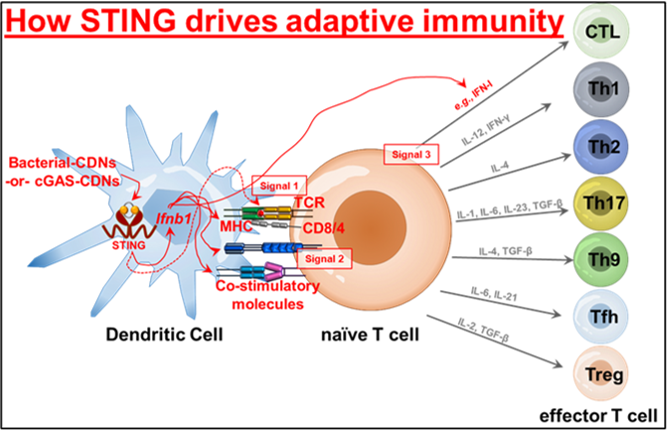
Rewriting the Paradigm: dead/inactivated, CDN-producing bacteria promote anti-tumor responses.
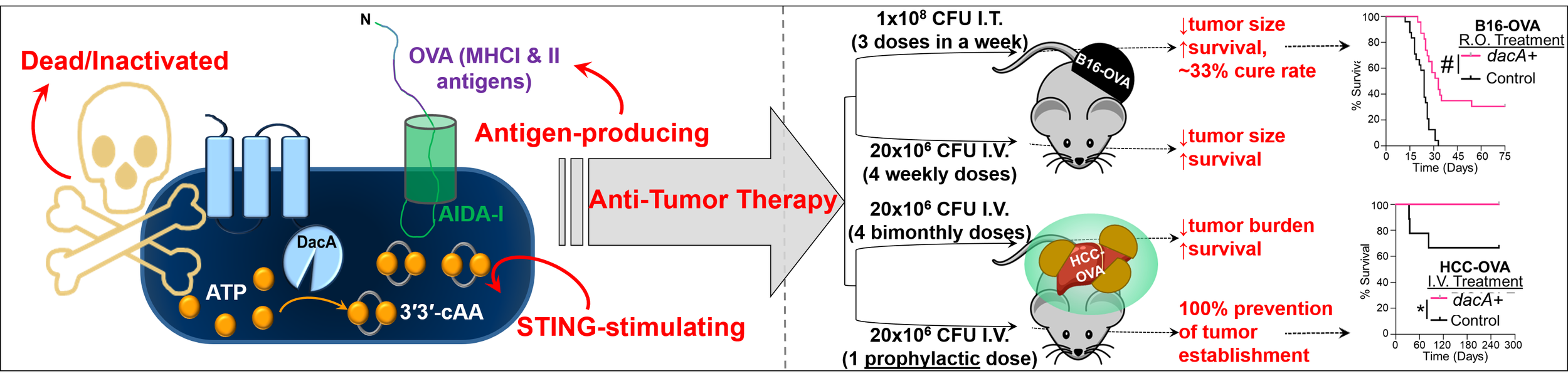
In the Ragland lab, we seek to develop disruptive technology in the space of bacteria-based cancer immunotherapeutics. The foundation of our immunotherapeutic uses bacteria that are engineered to overproduce STING-stimulating CDNs and tumor-specific antigens. Notably, the bacteria are then inactivated prior to in vivo treatment, which entirely prevents any risk of infection. We have shown efficacy with these bacteria in multiple cancer types via multiple administration routes. Several projects underway in the RAGLAND lab revolve around further engineering of these bacteria for optimal innate-driven anti-tumor immunity.